A Piercing Is a Healing Process, Not Just an Appointment
The actual piercing may happen quickly. The decision and healing process last much longer.
A well-planned piercing begins with anatomy, placement, jewelry, and lifestyle. The jewelry has to fit the tissue correctly. The placement has to make sense for the way your body is built. The initial piece needs enough room for early swelling without becoming so long that it creates unnecessary movement and snagging later.
Then the piercing has to heal.
That means the quality of the procedure matters, but so does everything that happens afterward: how often you touch it, what you clean it with, whether you sleep on it, whether the jewelry fits properly as swelling changes, and whether you return for professional help when something does not look right.
Piercing should not be treated like buying an accessory and having someone make a hole for it. The jewelry is temporarily living inside a healing wound. The decisions around that jewelry matter.
This pillar covers the whole process. The supporting guides go deeper into the parts that deserve their own explanation.
Start With the Piercing, but Think About the Anatomy
A photograph can make a piercing look universal.
It is not.
The shape and amount of tissue available can change whether a placement is suitable, where the jewelry should sit, and which jewelry style makes sense. This is especially important for cartilage, navels, eyebrows, certain ear projects, and other placements where small anatomical differences can completely change the result.
A professional piercer should evaluate the actual anatomy rather than promising every requested placement to every person.
Sometimes the answer is a small adjustment. Sometimes another placement creates the same visual effect more safely. Sometimes the anatomy simply does not support the exact piercing you had in mind.
That is not a failed consultation. It is the point of having one.
Piercing Types, Placements & AnatomyChoose a Piercing for Your Real Life
The best placement is not only the one you like in a photograph.
Think about headphones, helmets, glasses, work equipment, sports, hair, makeup, sleep position, clothing, and anything else that repeatedly touches the area.
An ear piercing that sits exactly where your headphones press every day can be much harder to leave alone. A navel piercing constantly caught by a waistband can stay irritated. A facial piercing may interact with glasses or grooming habits.
Healing tissue does not care that the source of pressure is part of your normal routine.
The question is not whether you are willing to be careful for one afternoon. It is whether the placement works with months of normal life while your body finishes healing it.
Pain Is Real, but It Is Usually Not the Most Important Variable
Pain is one of the first things people ask about, and one of the hardest things to predict.
Different placements feel different, but pain tolerance also varies enormously between people. Anxiety, sleep, stress, previous experience, and individual anatomy can all change the way a procedure feels.
For most piercings, the sharp part of the procedure is brief.
Healing is the longer commitment.
That means a piercing that feels easy on the day can still become frustrating if it is constantly bumped, slept on, or fitted with inappropriate jewelry. A more uncomfortable procedure can heal uneventfully when placement and aftercare are well managed.
Choose based on the piercing you want and whether it suits your anatomy and lifestyle, not only on somebody else’s one-to-ten pain rating.
Jewelry Is Part of the Procedure
Initial piercing jewelry is not the same decision as choosing a decorative earring for a long-healed lobe.
Fresh piercings need jewelry that is suitable for direct contact with healing tissue. The material, surface finish, gauge, length or diameter, threading style, and overall design can all influence healing.
Jewelry that is too short can become tight as tissue swells. Jewelry that is unnecessarily long after swelling resolves can move, snag, and create irritation. Jewelry with rough surfaces or exposed external threads can traumatize a healing channel.
Material labels also need more precision than phrases like “hypoallergenic” or “surgical.”
High-quality professional piercing jewelry is selected using actual material standards and manufacturing quality.
Implant-grade titanium that meets appropriate ASTM or ISO standards is a common choice. Certain documented steels, niobium, suitable solid gold alloys, platinum, and specific glass materials can also be appropriate depending on the piece and placement.
Piercing Jewelry Guide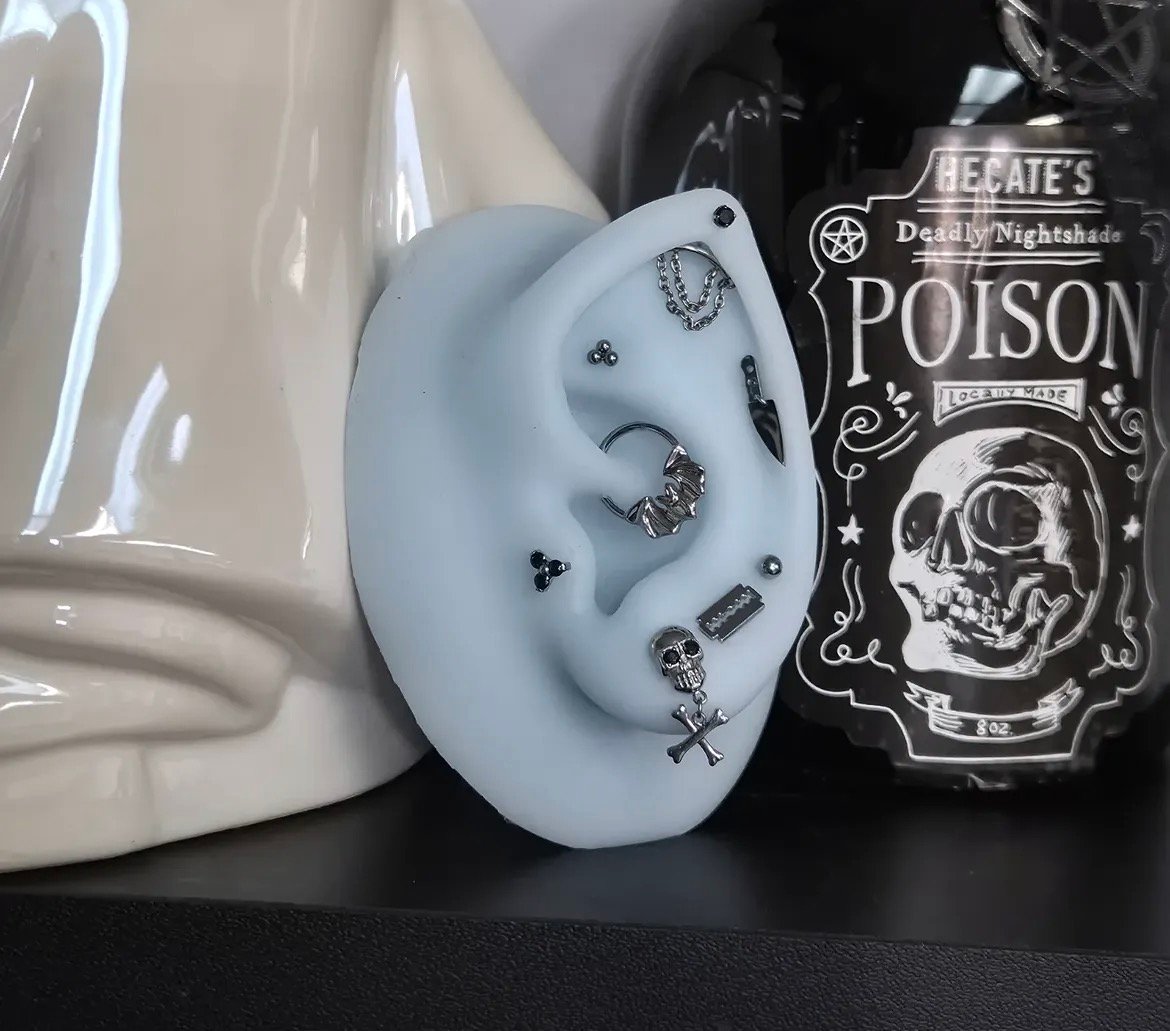
What a Professional Piercing Appointment Should Include
A piercing appointment should feel deliberate, not rushed.
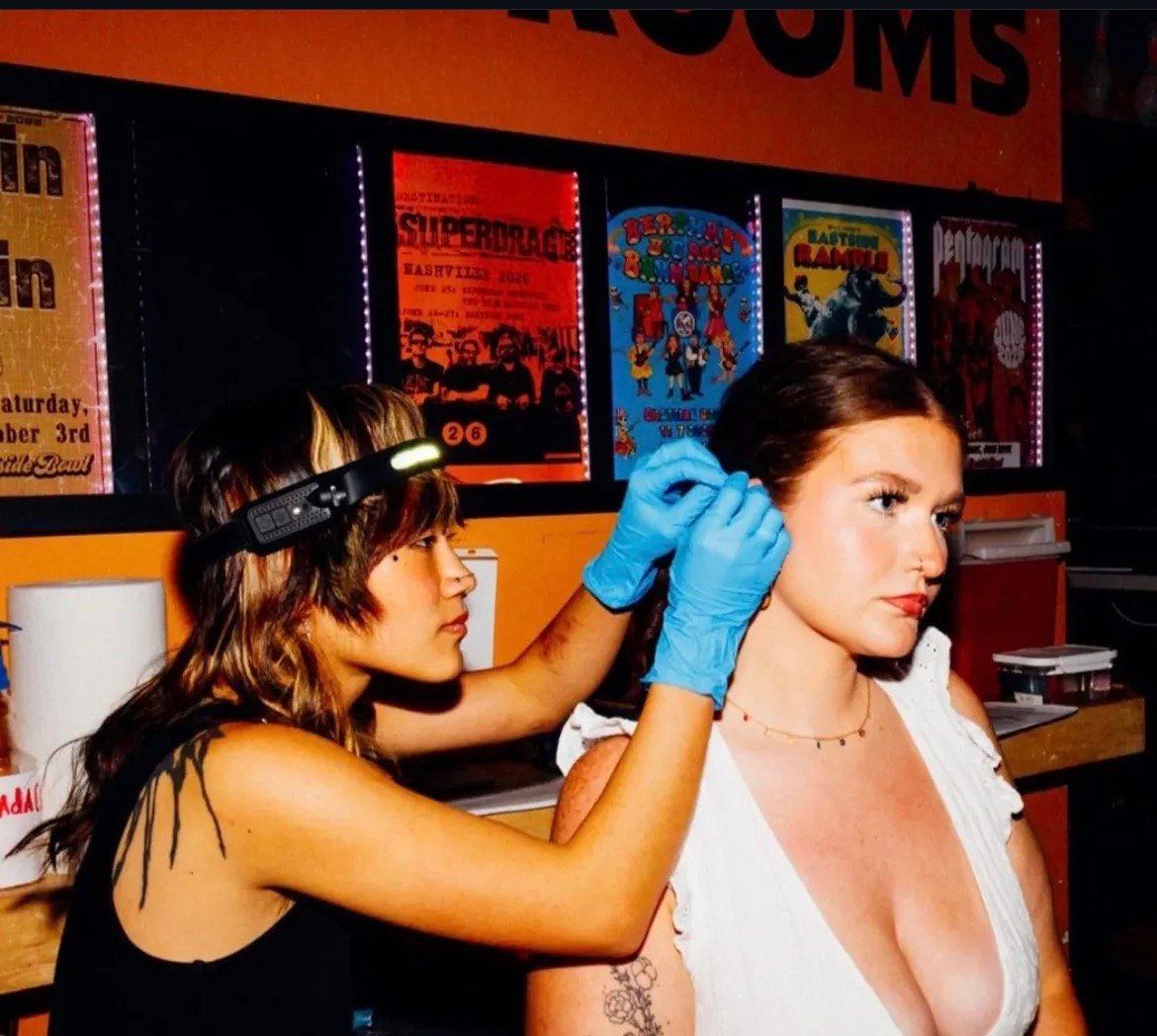
The piercer should review the placement, evaluate anatomy, discuss jewelry, and mark the location before the procedure. You should have the opportunity to see the mark and ask questions.
Professional piercing standards also include hygienic technique, sterile appropriate equipment, and a new sterile single-use piercing needle.
Piercing guns should not be treated as an equivalent professional technique. APP guidance specifically opposes piercing guns, including for earlobes, because of concerns around tissue trauma, jewelry design, sterilization, and fit.
The appointment should stay educational and thorough: anatomy, jewelry, marking, sterile technique, and aftercare all belong in the process, not only the few seconds of the piercing itself.
What to Expect During a Piercing AppointmentInitial Jewelry Often Looks Longer for a Reason
Fresh tissue can swell.
That is why many piercings begin with jewelry that includes additional room rather than sitting as tightly as the final piece eventually will.
The extra room helps prevent swelling tissue from being compressed or embedding around jewelry.
But initial length is not always meant to stay forever.
After early swelling subsides, excessively long jewelry can move too much, catch on clothing or hair, change the angle of pressure, and create ongoing irritation.
That is where downsizing comes in.
A downsize means replacing the initial post or bar with a shorter appropriately fitted piece after the swelling phase has passed. Because this often happens while the piercing is still healing internally, it should normally be handled by a qualified piercer rather than treated as the moment to start casually changing jewelry yourself.
Changing & Downsizing Piercing JewelryHealing Times Are Longer Than They Look
One of the most misleading things about piercings is how normal they can look before they are fully healed.
Piercing channels heal from the outside inward. The surface can appear calm while the tissue inside remains fragile.
That is why “it stopped hurting” is not the same as “it is completely healed.”
Different placements also heal at very different speeds.
APP educational material lists broad average minimums such as earlobes around six to eight weeks or longer, nostrils around three to four months or longer, and many ear-cartilage placements around six to nine months or longer. Septum and tongue piercings may have shorter average minimums, while navels and cartilage can remain healing projects for many months.
Those are not deadlines or guarantees.
Your body, placement, jewelry fit, trauma, health, and aftercare all affect the actual timeline.
Piercing Healing TimesGood Aftercare Is Usually Simple
Healing piercings generally do better with less interference, not more.
APP aftercare guidance emphasizes clean hands, sterile saline wound wash, gentle drying, and leaving the jewelry alone rather than twisting or spinning it.
For routine body-piercing aftercare, packaged sterile saline labeled as wound wash with 0.9% sodium chloride and no unnecessary additives is a useful standard.
More aggressive cleaning is not automatically better.
Alcohol, hydrogen peroxide, iodine, harsh antibacterial products, and repeated aggressive cleaning can irritate tissue and interfere with healing. Heavy ointments are not standard routine piercing aftercare either.
The goal is not to sterilize your body repeatedly.
The goal is to keep the area reasonably clean while allowing tissue to heal without constant chemical or mechanical trauma.
Piercing AftercareA healing piercing does not need constant attention. It needs clean habits, good jewelry, and enough patience to leave it alone.
Against the Grain
Pressure and Friction Can Be Bigger Problems Than Dirt
A piercing can be cleaned perfectly and still stay irritated.
Sleeping directly on a healing cartilage piercing can put hours of pressure on the tissue. Tight clothing can aggravate a navel. Headphones can press on an ear project. Hair can catch jewelry. Towels can snag it.
These are mechanical problems.
No amount of extra saline fixes a piece of jewelry that is being pushed sideways for eight hours every night.
When a piercing is persistently unhappy, look beyond the cleaning routine. Think about pressure, jewelry length, angle, movement, material, and anything in your daily routine that repeatedly touches the area.
This is one reason professional follow-up matters.
Irritation Is Not Automatically Infection
Redness, tenderness, swelling, and some light-colored healing secretion can occur during normal healing.
That does not mean every angry-looking piercing is infected.
Irritation can come from excessive movement, sleeping on the piercing, inappropriate jewelry size or style, harsh cleaning products, snagging, or changing jewelry too early.
Infection is a medical issue and can involve worsening pain, heat, spreading redness or discoloration, significant swelling, pus, fever, or feeling unwell.
The distinction matters because the solution for irritation may be reducing trauma or correcting jewelry, while a suspected infection may require medical evaluation.
Cartilage infections deserve particular caution because complications can be more serious.
Piercing Bumps, Irritation & InfectionDo Not Remove Jewelry Reflexively When You Suspect Infection
This is one of the most important pieces of piercing advice to get right.
If a piercing may be infected, taking the jewelry out without guidance can allow the outer openings to shrink or close while infection remains trapped inside.
The APP advises discussing jewelry removal with a physician when infection is suspected.
That does not mean jewelry should never be removed.
It means “take it out immediately” is not safe universal internet advice.
If you suspect a significant infection, especially with worsening symptoms, fever, spreading redness, substantial swelling, or painful cartilage involvement, seek qualified medical care.
Oral Piercings Have Their Own Rules
Tongue and lip piercings interact with the mouth, teeth, and gums, so they need additional consideration.
Early swelling can be significant. Initial jewelry often needs extra room for that swelling and then a professional downsize once the swelling resolves.
Leaving oral jewelry excessively long increases the chance of catching or repeatedly contacting teeth and gums.
Oral hygiene matters too.
APP oral aftercare guidance emphasizes normal oral hygiene, appropriate alcohol-free/hydrogen-peroxide-free mouth rinse or clean water, and avoiding unnecessary trauma and playing with jewelry.
Tongue and lip piercings are among the placements discussed on Against the Grain’s piercing services page. The notes above are general education about oral healing and jewelry, not a description of a specific studio procedure.
Piercings at Against the GrainChanging Jewelry Is a Healing Decision, Not Just a Style Decision
People naturally want to switch jewelry.
The problem is that a piercing can look healed long before the inside is ready for unnecessary manipulation.
Changing jewelry too early can traumatize the channel, restart swelling, introduce contamination, or make reinsertion difficult.
A professional downsize is different from casually changing the jewelry because you want a new look. Downsizing is often part of the healing process and may happen before full healing is complete.
Decorative changes should wait until the placement is sufficiently healed and stable.
When in doubt, let a piercer assess it.
Changing & Downsizing Piercing JewelryFollow-Up Is Part of Professional Piercing
A piercing studio should not disappear from the process once you walk out the door.
Questions happen.
Swelling changes. Jewelry may need to be downsized. A piercing may get snagged. You may not know whether a bump is irritation or something that needs more attention.
The earlier a problem is identified, the easier it often is to correct the source of irritation before months of bad habits accumulate.
Professional piercing is not only the procedure.
It is anatomy, jewelry, sterile technique, education, follow-up, and the judgment to know when a piercing concern belongs with a piercer and when it belongs with a healthcare professional.
Start With the Piercing You Actually Want
You do not need to arrive knowing jewelry standards, gauge terminology, healing phases, or every piercing name.
Bring the idea.
Think about where you want it, how visible you want it to be, what your daily routine looks like, and what questions you have.
A good consultation should make the decision clearer.
Explore the specific guides in this series when you want to go deeper, or visit the existing piercing service page to take the next step.
Piercings at Against the Grain